In the recent years, internet assumed an almost indespensable role in the artist's life.
From exposure to selling, internet allows artists to show their work to a worldwide audience, something that years ago was only accessible to renowned ones. This fact has been mostly welcomed by young and emerging artists who strive with great difficulty to get there work into a gallery.
But together with the swift expansion of the internet, arrived a large number of artists with their own websites, either developed by themselves or recurring to web services that aggregate websites for artists in a common platform.
The task of getting one's work noticeable among all these websites has become a time consuming task that often takes artists from their creative process. Selling or being represented by a brick and mortar gallery is therefore a serious objective to be considered.
Many artists sell their art through several venues, including online, at their studio or through galleries.
We are not here to discuss which venue is better. Each artist will have to discover that throughout his/her career. However it's hardly arguable that being represented by a gallery is in the plans of most artists and is seen as a top achievement in one's artistic career, besides getting into a museum but that's another story.
Working with a good gallery also enables artists to concentrate on their art and artistic development, while the gallery makes its best to promote their work. It's a common interest afterall.
Although many galleries will have no problems with their artists selling online or on their own (as long as they observe certain rules), there are those that will work solely with artists who only sell through galleries, be it with an exclusivity contract or not. This will depend on several factors, including territorial boundaries that can go from a small town to a country or even worldwide.
The Art Inquirer contacted with a representative of a well-established gallery that does not represent artists who sell online or at their studi. However most of them have their art available for viewing online, which is good for gaining exposure for their work and for the gallery that represents them.
In his own words, he explains the reasons for this fact:
«We believe artists should have and maintain their own web presence and we have no problem with those who choose to represent and sell their own work. We just aren't going to represent those who do. The main reason we take the stand we do is in order to clearly define and establish the integritiy of that aritst's market.
It is not beneficial for us as a gallery to be in direct competition with the artists's whose careers we are trying to advance. This is harmful for the legitimate establishment of the artist's retail market not to mention the eventual tarnishing of the reputation of the artist as well as undermining of the gallery.
This relationship allows the artist to concentrate on being an artist and allows the gallery to focus on being a retail market.»
«We represent artists who have websites. We just don't represent artists who sell their work directly to the public. In fact most of our artists have their own website, however, we (or their other galleries) handle their sales and when collectors try to sidestep the galleries the artists refer the collectors back to the galleries.»
Artists share different points of view about this. To give you a better understanding about what they think and their experience, The Art Inquirer asked their opinion in one of the most famous and most frequented art forums worldwide.

Showing posts with label art business. Show all posts
Showing posts with label art business. Show all posts
Wednesday, July 11, 2012


Sunday, June 24, 2012
How Google Alerts can Work for Artists
Any artist is interested in knowing if his/her name and work is being mentioned and wants to know if the time spent in front of the computer, namely writing articles on a blog, updating the website, interacting in art forums and social networks, doing online marketing, etc, instead of solely concentrating on the artwork, is giving its expected rewards.
Because they also want to spend time working on their art, artists not always have time to search for new opportunities, such as art contests, grants, art scholarships, exhibitions where their work would fit, artistic residencies, and art workshops, just to name a few.
What if you could set alerts according to your parameters to inform you about things that are relevant for your artistic career ?
This is where Google Alerts comes in.
Google Alerts is a content change detection and notification service that automatically notifies users when new content from news, blogs, videos, discussion groups and books, matches a set of search terms defined by the user.
As similar to what happens in normal searches, setting an alert with Pet Portraits in Pastel, won't lead to the same results as "Pet Portraits in Pastel," for insteance. Google Alerts will only show results from Google's own search engine.
Users can set how they wish to receive the alerts (email or feed), with how much frequency, and the sources of those alerts. They can also opt between all the results or the most relevant ones.
Artists can spend more time working on their projects. Then they can go on the computer and check the alerts about what is really important for them.
Of course that using this service should not hold you from doing your own search and you should not set alerts for everything that you wish to know, or you'd be spending more time reading the alerts than working on your art.
Learn how to use Google Alerts and make it work for you.
Because they also want to spend time working on their art, artists not always have time to search for new opportunities, such as art contests, grants, art scholarships, exhibitions where their work would fit, artistic residencies, and art workshops, just to name a few.
What if you could set alerts according to your parameters to inform you about things that are relevant for your artistic career ?
This is where Google Alerts comes in.
Google Alerts is a content change detection and notification service that automatically notifies users when new content from news, blogs, videos, discussion groups and books, matches a set of search terms defined by the user.
As similar to what happens in normal searches, setting an alert with Pet Portraits in Pastel, won't lead to the same results as "Pet Portraits in Pastel," for insteance. Google Alerts will only show results from Google's own search engine.
Users can set how they wish to receive the alerts (email or feed), with how much frequency, and the sources of those alerts. They can also opt between all the results or the most relevant ones.
Artists can spend more time working on their projects. Then they can go on the computer and check the alerts about what is really important for them.
Of course that using this service should not hold you from doing your own search and you should not set alerts for everything that you wish to know, or you'd be spending more time reading the alerts than working on your art.
Learn how to use Google Alerts and make it work for you.
Thursday, June 21, 2012
ICANN revealed the applicants for the new .art internet domain
The Internet Corporation for Assigned Names and Numbers (ICANN), the authority that controls the internet by managing the database of addresses of every website and webpage, recently announced the list of companies who have applied to open and manage new top-level domain names.
Among the list of the most requested TLDs (Top Level Domain) is .art, with 10 requests.
As an artist and author of this art dedicated blog, I stress the importance of assigning such an important domain to a company that will not only guarantee the development of the new extension, but will also follow a discerning policy for its use.
Only a company with long experience and established presence in the art world, managed by art related people, will have the abillity to offer the best experience for the future users of the new .art T.L.D.
On the contrary, companies created for the sole purpose of having control of the domain, should not be considered.
In whatever way you relate to the arts industry: as an artist, art collector, museum curator, gallerist, art lover, etc, your opinion matters.
On a side note, this whole process hasn't been exempt from controversy, as you can read in an article from April 2012, mentioning the dispute of Paul Garrin, founder of name.space, the East Village-based start-up, in 1996, against ICANN.
From a total of 482 internet domains, in 2000 , name.space paid ICANN a $50,000 application fee for approval of 118 of its T.L.D.s, seeking to gain access to the main root. To this day, ICANN has yet to resolve Garrin’s application. The .art T.L.D. is one of those.
Among the list of the most requested TLDs (Top Level Domain) is .art, with 10 requests.
As an artist and author of this art dedicated blog, I stress the importance of assigning such an important domain to a company that will not only guarantee the development of the new extension, but will also follow a discerning policy for its use.
Only a company with long experience and established presence in the art world, managed by art related people, will have the abillity to offer the best experience for the future users of the new .art T.L.D.
On the contrary, companies created for the sole purpose of having control of the domain, should not be considered.
In whatever way you relate to the arts industry: as an artist, art collector, museum curator, gallerist, art lover, etc, your opinion matters.
On a side note, this whole process hasn't been exempt from controversy, as you can read in an article from April 2012, mentioning the dispute of Paul Garrin, founder of name.space, the East Village-based start-up, in 1996, against ICANN.
From a total of 482 internet domains, in 2000 , name.space paid ICANN a $50,000 application fee for approval of 118 of its T.L.D.s, seeking to gain access to the main root. To this day, ICANN has yet to resolve Garrin’s application. The .art T.L.D. is one of those.
Sunday, January 16, 2011
VIP Art Fair - Exclusively Online
In recent years the art market witnessed the emerge of online venues with the purpose of permiting new artists to show and sell their works without passing through the traditional galleries.
Now a project catered for the major traditional galleries has been created, which will allow them to show their artworks online and fully interact with the public and especially with art collectors.
Conceived by James Cohan, active in the contemporary art world for more than 25 years as a dealer and founder of the James Cohan Gallery in New York in 1999, between other activities, the VIP Art Fair will, in similarity to its traditional counterparts, be open during one week, with the main difference of happening exclusively online and permiting less expenses to exhibitors and visitors.
Gathering some of the best world renowned art galleries, including Almine Rech, Anna Schwartz, David Zwirner, Emmanuel Perrotin, Fraenkel, Hauser & Wirth, Hyundai, James Cohan, Larry Gagosian, Luisa Strina, Koyanagi, Marlborough, Max Hetzler, Sadie Cole HQ, ShangART, Sommer Contemporary Art, White Cube, Yvon Lambert, and Xavier Hufkens, among others, in a total of 139 galleries from 30 countries, this online event is bound to become a case study in the art market and which paths it may take from now on, especially when such influent names are involved.
Featuring a revolutionary design, VIP Art Fair will offer art collectors the opportunity to view artwork through an innovative technology that presents artworks in relation to other works of art and to the human figure. Inquisitive visitors will be able to zoom in to examine details of a painting’s surface, get multiple views of a three-dimensional work, and watch videos of a multimedia piece. Galleries will provide comprehensive details on artworks and artists, including biographies, catalogue essays, artist films and interviews, and in-depth information that will empower collectors.
An important aspect of this online international contemporary art fair is going to be the interactivity between dealer and collector. Each dealer will have the ability to hold conversations with collectors via instant messaging, Skype, and telephone to discuss works on offer in the virtual booth (10 to 20 works).
Specially-created Private Rooms will permit dealers to share works from their gallery's backroom inventory (between 40 and 70 works) in real time with their clients.
Online payments will not be offered through this platform during this art fair.
The VIP Art Fair can be explored through different perspectives, including the obvious online tours, which can be based on featured works, tours created by collectors, critics, or even by curators from participating museums. Visitors will be able to build their own personalized tours of the Fair that showcase their favourite works and share with friends or post them in the VIP Lounge. Other ways to navigate the site wil include the Fair Map and advanced searches based on criteria of interest, such as artist’s name, medium, or price range.
The Fair will open on Saturday, January 22, 2011 at 8:00 a.m. EST and conclude on Sunday, January 30, 2011, at 7:59 a.m. EST. Browsing the Fair is free of charge. To access interactive capabilities, visitors must have a VIP Ticket, which on January 22 and 23 will cost $100 and thereafter will cost $20. You can request an invitation here.
VIP Art Fair was founded by James Cohan, founder of the James Cohan Gallery in New York in 1999 and board of directors of the Art Dealers Association of America, Art 21 and Independent Curators International; Jane Cohan, industrial designer by training and partner at James Cohan Gallery, New York/Shanghai, where she manages press relations and acts as artist liaison; Jonas Almgren, involved in the launch of Vantive (IPO 1995), InterWeave (sold 1997), E.piphany (IPO 1999), PremierGuide (sold 2007), and One Art World (2005); and Alessandra Almgren, starter of the Home Theater Research Group in 1998 and co-founder of One Art World.
Its directors are Noah Horowitz, Adjunct Professor of Art Business at the Sotheby's Institute of Art, New York, and author of "Art of the Deal: Contemporary Art in a Global Financial Market", and Stephanie Schumann, who brings her experience from The Whitney Museum of American Art, The Drawing Center, and The Clark Art Institute, Williamstown, where she is a founding patron and chair of the museum’s young benefactors group.
Other names include Sidney Blank, Marco Raab and Olaf Kreitz, all from Supermetric.
The promotional video for VIP Art Fair was created by When in Doubt Productions in collaboration with Force of Feather
Wednesday, December 22, 2010
The Uncovered Artistry Project - Empowering Domestic Abuse Survivors

Created by Angela Spoto together with her sister Sarah, the Uncovered Artistry project intends to provide domestic abuse victims with means to improve their financial situation and express their creativity, as well as to share their experiences with others in the same situation.
Operating out of Seacoast New Hampshire, the project is a nonprofit online boutique that provides an outlet to the finely crafted work of domestic abuse survivors and non-survivors in America and Canada who support abuse awareness. Uncovered Artistry also educates its customers about domestic abuse in order to raise awareness and eliminate stereotypes.
In order to give a general idea of how things work and answer a few doubts that may raise from those interested in participating, either as artisans or as sponsors, The Art Inquirer has conducted an interview with the authors of the project.
TAI When did you come up with the idea for this project ?
UA We thought of Uncovered Artistry last winter when we heard about the Projects for Peace grant, which gives select students $10,000 to start a project that promotes peace. We knew we wanted to empower women in some way, and since we had previously owned a jewelry shop on Etsy, we deiced to take our skills and start a nonprofit boutique that sells the work of domestic and sexual abuse survivors. Luckily, we got the grant!
TAI Why did you decided to make this project ?
UA We believe in the empowering effects of entrepreneurship and art and wanted to give others the opportunity to expand their businesses.
TAI Where has this project started and if it's still on the same venue ?
UA Currently, we sell exclusively online at Uncoveredartistry.com. We operate out of two locations: Seacoast New Hampshire in the summer and Chicago during the school year while we are at college.
TAI Do you have plans to expand this project ?
UA Yes, definitely. We are currently exploring other grant possibilities. We'd like to have many more artisans, a larger website, and more employees. We intend to reach out to the community and host community events. Also, we hope to raise $10,000 for domestic abuse shelters.
TAI Why did you think that this specific project would be a successful option ?
UA We believe that taking a for-profit business model and creating a nonprofit will enable us to become self-sustaining and reach more individuals.
TAI According to the artists/crafters, how has this project improved their lives ?
UA Here are some quotations from several of our artisans:
"When I work on my jewelry, I feel peaceful. I'm so focused on the project that I am able to momentarily "forget" those bad experiences. And I feel good about myself when I'm done with a pair. Some of my self-worth and confidence has returned."
"Creating has always been a way to get away from reality. As well as show that you are worthwhile and talented which I heard over and over I wasn't. It gives me self confidence I don't think I could have gotten elsewhere.Creating has always been a way to get away from reality. As well as show that you are worthwhile and talented which I heard over and over I wasn't. It gives me self confidence I don't think I could have gotten elsewhere."
"It helps me focus more on beauty and seeing the beauty inside myself. It's helped me accept myself more and actually love myself more because I have the ability to highlight the beauty of others. I can make others smile with it and that is worth everything to me. To have contemplated suicide many times and then to be able to help others showcase their own beauty means the world to me. I not only survived, but I've overcome, I've learned to forgive, and I've learned patience."
TAI From which areas do you accept works ?
UA Our artisans are from all over the country, and we do accept artisan applications from Canada.
TAI How can people contribute for this project ?
UA We take donations, both monetary and artistic donations. For instance, students at Lake Forest College donated a number of jewelry pieces. We accept most types of items, including artwork, jewelry, accessories, and home decor. If you are interested in donating, please contact Sarah at sarah(at)uncoveredartistry.com.
TAI What kind of art/craft is more common ?
UA Most of our artisans create jewelry, but we also sell artwork, accessories, and home decor. Our most popular sellers are necklaces, sculptures, and earrings.
TAI For those who don't have any means to buy materials to start, can you provide them with any kind of help ?
UA Yes, Uncovered Artistry has set aside a microloan fund for the purpose of providing artisans who may not have the current financial means to start their business with a small loan ranging from $25 to $100.
TAI Do you think that besides its main function, this project is also a vehicle for its users to share their experiences with each other ?
UA We hope that our artisans feel a connection with other artisans who have gone through similar experiences. We hope to start an artisan newsletter through which UA artisans can get to know one another.
TAI Have you ever felt when gathering information and promoting this project, that the tabu of not interfering in a couple's life is still implated in our society when talking of domestic violence ?
UA We think that many times people chose to ignore domestic abuse when it is happening. We believe this is unacceptable. Domestic abuse and sexual abuse should not exist, and we hope to promote awareness.Domestic violence is certainly a touchy issue. We are always mindful of the comfort level of our artisans when talking about this issue. Some artisans don't mind discussing it, while others would like to avoid the issue.
TAI How are you advertising this project to reach the maximum number of people ? Have you gotten interested sponsors ?
UA We currently advertise online at craftcult.com, greatgreengods.com, and modishblog.com. We also write a weekly column for our college's newspaper.
The Uncovered Artistry project was made possible by a grant from Projects for Peace established by the international philantropist Kathryn Wasserman Davis, upon the occasion of her 100th birthday in 2007.
Wednesday, June 2, 2010
Why Artists Should Contact Local Businesses and Why These Should Support The Arts
In spite of the many online options available, artists and local business owners still face the hard task to see their products stand out from the competition.
The off-line cooperation between both can result into mutual benefits that can extend into the future.
Of course that this cooperation should not necessarily be restricted to local businesses and artists, but usually it will be easier for both parties to negociate and more practical in terms of logistics and transportation.
The approach should be made in a clear and objective manner and eventual deals and contracts will depend upon the relation between the artist and the business owner.
After things are settled, the expenses are expected to be easily supported by both parties, especially for the artist since like mentioned before, the fact of exhibiting at a local place won't carry huge transport expenses or travelling time.
Both the artist and the business owner should be aware of their obligations to make things work and therefore be able to benefit from the best possible results.
The artist should mention the event on the website or blog, send a newsletter to subscribers and an e-mail to his contacts (don't spam).
A press release can also be sent to local newspapers and flyers or brochures can be printed (you can even get a printing company to sponsor them in exchange of some advertising)
The artwork should be ready for exhibiting, together with the proper information about the works and the artist's contact, if possible with a cellphone number and not just an e-mail.
It's very important for the artist to be present at the inauguration in order to render any assistance and to provide the all needed answers to the public. Don't forget that is usually during the reception that an exhibition gets more visitors.
As for the business owner responsabilities, these should include mentioning the exhibition on the company's website, sending a press release, providing a space with good visibility, keeping the artwork in good condition and be present at the reception, or nominate a representative.
Arragements about the reception that should be kept simple and comparticipation expenses should be agreed in advance, not forgeting that people should be interested in the art and not about the food and drink.
Now it's time to talk about the best part: benefits for both sides.
The artist will gain exposure without having to pay gallery comissions (a percentage of the sold artworks for the business owner can be previously agreed) or renting a space.
The eventual association with a renowned brand can prove quite beneficial for the artist's recognition in the community and in the media, resulting in invitations for future exhibitions or being more easily accepted to exhibit in other venues.
Considerable are also the benefits for the business owner, namely in terms of brand-building and recognition by the artists, community and media.
Due to it's reference on the internet and local media, the business will receive more public which will stay more time and eventually acquire a product or service.
Most artists are not professionals and have a full-time job or at least another occupation, which if related to your business can result in a future comercial relation.
In the future it's quite possible that your website will receive more visits from people and media looking for future exhbitions.
As you can conclude, the cooperation between arts and businesses can result into positive benefits for both sides without demanding a huge investment.
If you have any doubts, you can post them at the Wetcanvas General Art Business Forum where artists and art related people will be happy to help you.
The off-line cooperation between both can result into mutual benefits that can extend into the future.
Of course that this cooperation should not necessarily be restricted to local businesses and artists, but usually it will be easier for both parties to negociate and more practical in terms of logistics and transportation.
The approach should be made in a clear and objective manner and eventual deals and contracts will depend upon the relation between the artist and the business owner.
After things are settled, the expenses are expected to be easily supported by both parties, especially for the artist since like mentioned before, the fact of exhibiting at a local place won't carry huge transport expenses or travelling time.
Both the artist and the business owner should be aware of their obligations to make things work and therefore be able to benefit from the best possible results.
The artist should mention the event on the website or blog, send a newsletter to subscribers and an e-mail to his contacts (don't spam).
A press release can also be sent to local newspapers and flyers or brochures can be printed (you can even get a printing company to sponsor them in exchange of some advertising)
The artwork should be ready for exhibiting, together with the proper information about the works and the artist's contact, if possible with a cellphone number and not just an e-mail.
It's very important for the artist to be present at the inauguration in order to render any assistance and to provide the all needed answers to the public. Don't forget that is usually during the reception that an exhibition gets more visitors.
As for the business owner responsabilities, these should include mentioning the exhibition on the company's website, sending a press release, providing a space with good visibility, keeping the artwork in good condition and be present at the reception, or nominate a representative.
Arragements about the reception that should be kept simple and comparticipation expenses should be agreed in advance, not forgeting that people should be interested in the art and not about the food and drink.
Now it's time to talk about the best part: benefits for both sides.
The artist will gain exposure without having to pay gallery comissions (a percentage of the sold artworks for the business owner can be previously agreed) or renting a space.
The eventual association with a renowned brand can prove quite beneficial for the artist's recognition in the community and in the media, resulting in invitations for future exhibitions or being more easily accepted to exhibit in other venues.
Considerable are also the benefits for the business owner, namely in terms of brand-building and recognition by the artists, community and media.
Due to it's reference on the internet and local media, the business will receive more public which will stay more time and eventually acquire a product or service.
Most artists are not professionals and have a full-time job or at least another occupation, which if related to your business can result in a future comercial relation.
In the future it's quite possible that your website will receive more visits from people and media looking for future exhbitions.
As you can conclude, the cooperation between arts and businesses can result into positive benefits for both sides without demanding a huge investment.
If you have any doubts, you can post them at the Wetcanvas General Art Business Forum where artists and art related people will be happy to help you.
Thursday, January 21, 2010
Let Your Friends And Neighbours Sell Your Art
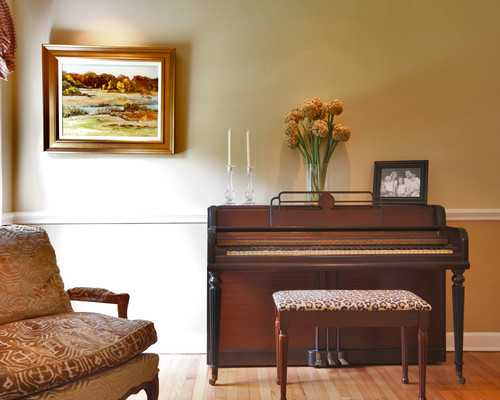
There are many many ways of selling art, but it's not simple to convince most of people to buy it. People like to see art and giving the right circumstances they would like to own it, however there is still the thought that art is something inaccessible and only reserved to some.
More than often they think that it might not go well with their decoration, although we know that art should be acquired for its own value and taste, not to go with the decoration.
So, how are we going to convince people that they can own an original work of art ?
It's simple, we are not going to simply tell, we are going to show them.
We know that it's not easy to sell art and artists are always searching for creative ways to convince collectors to buy their artwork, sometimes without the desired success.
One of the things that you may want to try is to place some of your works in the houses of your friends and neighbours at zero cost; I know that you're thinking "I could rent them", but that's another article.
This procedure can bring benefits to both parties.
Your friends and neighbours will seen an improvement in the decoration of their home, they will impress their visits (afterall they "own" a work of art) and they may even earn a comission by giving your contact and if a sale is made.
For you the benefits are also worth mentioning, such as having your art shown in a home environment, thus giving people an idea of how it might look in theirs, you will save space in your place and you can set the value of the percentage that you are willing to pay, instead of the usual 40 to 60 percent charged by galleries.
You won't be conditioned to programs, giving you the chance to arrange the exhibition timing according to your needs.
However before embarking into this, make sure that you have registered files of your works, proving that you own them.
I don't want you to lose a friend or prejudice the good relations that you have with your neighbours, so I'm not going to tell you to ask them to sign a paper.
Share your comments and ideas with us.
Subscribe to:
Comments (Atom)